



The Impact of Connected Cars on Driver Safety and Convenience
 Cars are getting smarter, and the rise of connected vehicles is changing the way we think about road safety. These smart vehicles are reshaping our driving habits, communication methods, and safety standards. Our team at Hyundai of Auburn in Alabama explores what this means for your safety and that of your passengers on the road.
2025 Hyundai Palisade For Sale
What Are Connected Cars?
Connected cars are vehicles with internet access and wireless networks that share data with interior and exterior devices to increase driving safety, efficiency, and comfort. They use sensors, GPS, and wireless systems to communicate with other vehicles, infrastructure, pedestrians, and cloud systems to avoid trouble and keep traffic flowing. Connectivity varies from basic media systems to fully autonomous vehicles. The Internet of Things forms the backbone of this technology, collecting data on vehicle performance, location, and surroundings to improve your driving experience and safety.
Various communication types work together:
- Car-to-car: Shares speed and location data
- Car-to-infrastructure: Interacts with traffic signals
- Car-to-pedestrian: Detects people nearby
- Car-to-cloud: Accesses wider networks
This comprehensive system prevents accidents and improves traffic flow.
Evolution of Driver Safety Technologies
Safety tech has evolved dramatically since seat belts and padded dashboards. These passive systems only provided protection during crashes. The 1970s brought airbags, which further helped reduce injuries during accidents. Smart electronics introduced active safety features such as antilock brakes and stability control that were designed to prevent crashes entirely.
Modern systems combine connectivity with artificial intelligence to predict and prevent accidents in ways once considered science fiction. Data analysis and machine learning keep improving these systems, ensuring each mile driven is safer than the last.
How Connected Cars Are Transforming Automobiles
Modern cars are essentially data centers offering digital services, creating new opportunities for carmakers and tech firms. Vehicle software now gets over-the-air updates without requiring new hardware, while artificial intelligence and machine learning enable preemptive maintenance, personalized experiences that learn your habits, and nearly clairvoyant safety systems. This allows cars to schedule their own service or adjust settings automatically for different drivers, features already offered in the Hyundai Palisade.
Vehicle-To-Vehicle Communication
Vehicle-to-vehicle (V2V) systems enable direct communication with other cars. They use short-range or cellular networks to exchange speed, location, and braking data, which offers substantial safety benefits. Your car receives instant warnings when vehicles ahead brake suddenly, giving you vital reaction time, and V2V prevents crashes at intersections by detecting cars hidden behind buildings.
This technology also presents various challenges. Widespread adoption is necessary for efficacy, and privacy and security need attention as the network expands. Still, V2V remains crucial for future road safety, especially as autonomous vehicles become more common.
Advanced Driver-Assistance Systems
Advanced driver-assistance systems use cameras, radar, and sensors to monitor your vehicle’s surroundings and improve your protection on the road. Key features include:
- Collision avoidance systems: Warn of potential accidents
- Adaptive cruise control: Maintains your speed and following distance
- Lane departure warning: Alerts you when you drift
- Automatic emergency braking: Stops your car when threats appear
- Emergency call systems: Automatically summon help after a crash
- Driver monitoring: Alerts you when it detects fatigue or distraction
Other systems include blind-spot detection, parking assistance, and traffic sign recognition. Despite their benefits, these technologies require responsible use. Some drivers over-rely on them, reducing their road attention. These are only aids and don’t replace alert driving. Hyundai models such as the Tucson offer these advanced safety features, putting cutting-edge protection at your fingertips.
Real-Time Traffic Alerts and Navigation
Smart cars use live updates and advanced navigation to enhance safety and save time. They gather info from nearby vehicles, cameras, and weather stations for current road conditions. Cloud computing then predicts traffic conditions, finds optimal routes, and warns drivers about accidents and road hazards to ease congestion and improve traffic flow. Future systems will get smarter with city integration, allowing precise traffic control, and navigation based on artificial intelligence will offer tailored routes based on your driving habits. As data collection grows, privacy safeguards will become vital for responsible use.
Predictive Maintenance and Diagnostics
Predictive maintenance monitors your car’s health, using sensors to track your engine performance, tire pressure, brakes, and battery condition, then artificial intelligence analyzes this data to identify issues before they escalate. Early problem detection can prevent breakdowns and accidents while extending your vehicle’s life span and increasing safety and reliability.
Challenges and Concerns Affecting Connected Car Safety
Despite their benefits, connected cars face various challenges, of which cybersecurity is the most concerning. Increased connectivity provides more targets for hackers, and attacks can control vehicle systems and create safety hazards. Privacy is also a concern, as connected cars track your travel route and driving habits. Clear standards for information collection and protection are lacking, and there’s potential for data theft or misuse.
Other problems include inconsistent standards between carmakers, distractions from complex dashboards, and system reliability questions. Ethical issues about how autonomous cars make decisions still need resolution. How we handle these challenges will shape the future of safe connected driving.
Visit Hyundai of Auburn Today
If you’re in Auburn, Alabama, and you’re curious about this technology, visit us to experience these vehicles firsthand. Our friendly team will walk you through the various features and answer any questions you may have. Contact us online or call 334-321-0777 to schedule a test-drive.
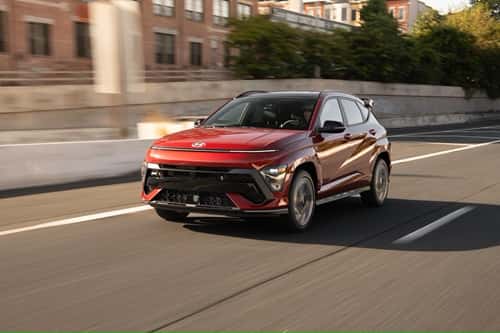
A red car driving down a street next to a building by Hyundai Motor Group is licensed with Unsplash License
0 comment(s) so far on The Impact of Connected Cars on Driver Safety and Convenience