



Signs Your Car Needs An Oil Change
Regular maintenance is essential for ensuring the top performance of your car. From rotating your tires to replacing your brake pads, each of these changes helps your vehicle perform optimally and may help you extend its lifespan. One of the most important routine maintenance practices to keep up with is getting your oil changed, but we understand it may be hard to know exactly when to do it. To help you take care of your vehicle, our team at Hyundai of Auburn created this guide discussing some of the signs that your car needs an oil change.
What Are Some Common Signs Your Vehicle Needs an Oil Change?
One of the easiest ways to know if it’s time for an oil change is watching for the warning lights on your dashboard. For example, most vehicles have an oil change light, which often resembles an oil can and illuminates when the vehicle’s oil levels are low. It’s also possible for your check engine light to light up if there are problems with your oil. Try checking your oil yourself, or stop by to have a mechanic look at it as soon as possible.
Another way to know if your vehicle needs an oil change is by checking the levels yourself. Park your car, enable the parking brake, then pop the hood and locate the dipstick. It’s typically in a tube with a cap on it. With a rag or paper towels ready, pop the cap, then wipe the end of the dipstick. This allows you to read the dipstick, which should have lines with words like “Add” or “Safe,” denoting whether your vehicle needs more oil. Place the dipstick back in the tube, then pull it back out to read the level. Replacing your oil might be the easiest of the at-home maintenance you can do on your own but there are many benefits for having even the easiest service taken care of at a dealership instead of on your own.
While you have the hood popped and the dipstick accessible, evaluate the appearance of the oil. For example, as oil runs through the engine, it collects particles, turning the oil darker. Oil that’s too dark or a strange, non-liquid consistency is an indicator you need an oil change.
Pay attention to your car as you drive and note any unfamiliar sounds, smells, or feelings. For example, if it smells like something is burning while you drive, this may be your engine running warm because of low oil levels. Another example is the sounds you may hear your car make, such as the engine making a ticking sound as old oil struggles to work through the engine or a knocking sound if the oil running through the engine is thin or old.
As you drive, notice if it becomes difficult to shift gears or get your engine to turn over when it starts. This can be a reflection of poor engine performance thanks to low oil. Feeling vibrations while you drive, particularly if the engine is idling, can also show a need for an oil change. Another smell to be conscious of is too much exhaust. Most vehicles produce very little exhaust, and it should be translucent, so too much exhaust and exhaust that you can see easily may indicate you need an oil change.
Finally, think about your own driving habits. If you notice you’ve been driving a lot lately or you’re about to embark on a long-distance drive, it’s smart to head in for an oil change. Similarly, if you feel like you’ve made more frequent stops at the pump to refill your gas tank, but nothing else about your driving habits changed, this suggests poor fuel performance and it’s time for an oil change.
How Often Should You Change Your Oil?
How often you should change the oil in your vehicle depends on a variety of factors, especially its maintenance needs. The best way to ensure you keep up with proper oil changes for your car is to check your owner’s manual to see what the manufacturer’s recommendations are for oil change intervals. Depending on the type of vehicle you have, the recommendation may be to change your oil often, such as every 4,500 to 5,000 miles, or you may be able to get less frequent oil changes, such as every 6,000 to 7,500 miles.
Another factor to consider when determining how often to change your oil is your own driving habits. How often you drive, the lengths of your drives, and the conditions you commonly drive in can influence how frequently you should change your oil. Some examples of habits that may affect the life of your oil include driving:
- In dusty conditions or mountainous areas.
- In stop-and-go traffic, requiring you to idle or drive at low speeds for long time periods.
- On muddy roads, rough roads, or roads covered with corrosive materials, such as salt.
- While pressing your brakes often.
- In humid temperatures, extreme cold, or heavy city traffic in warm weather frequently.
Similarly, if you don’t drive often, the manufacturer may include a recommendation in your manual to still change your oil on a time-based interval, such as every six months to one year. This helps keep your oil fresh, which is important because it becomes less effective as it gets older. Driving with old oil may affect your vehicle because the oil may not warm the engine enough. This can lead to excess moisture staying within the engine, shortening its life.
Does the Type of Oil Matter?
Oil changes are not a one-size-fits-all process. It’s important to choose the correct type of oil that your vehicle’s engine needs, and you can typically find this information in your owner’s manual. The manufacturer recommends what type of oil to use, and it may offer suggestions based on your driving habits or climate. One of the most important factors to consider when picking what type of oil to use is the viscosity, which refers to how thick the liquid is. Choosing an oil that is either too thick or too thin won’t lubricate your engine properly, which can damage it.
We’ve reached the end of our guide discussing some of the signs your car needs an oil change. We hope you learned some useful information to help take the best possible care of your car. Ready for your next oil change or still not sure exactly what maintenance your vehicle may need? Schedule a service with a car mechanic today or CALL US. At Hyundai of Auburn, we’re an authorized Hyundai dealer and proud to be the name in Auburn you can trust. Our trained professionals use genuine Hyundai parts to preserve your vehicle’s top performance. Visit our state-of-the-art auto repair facility and service center today.
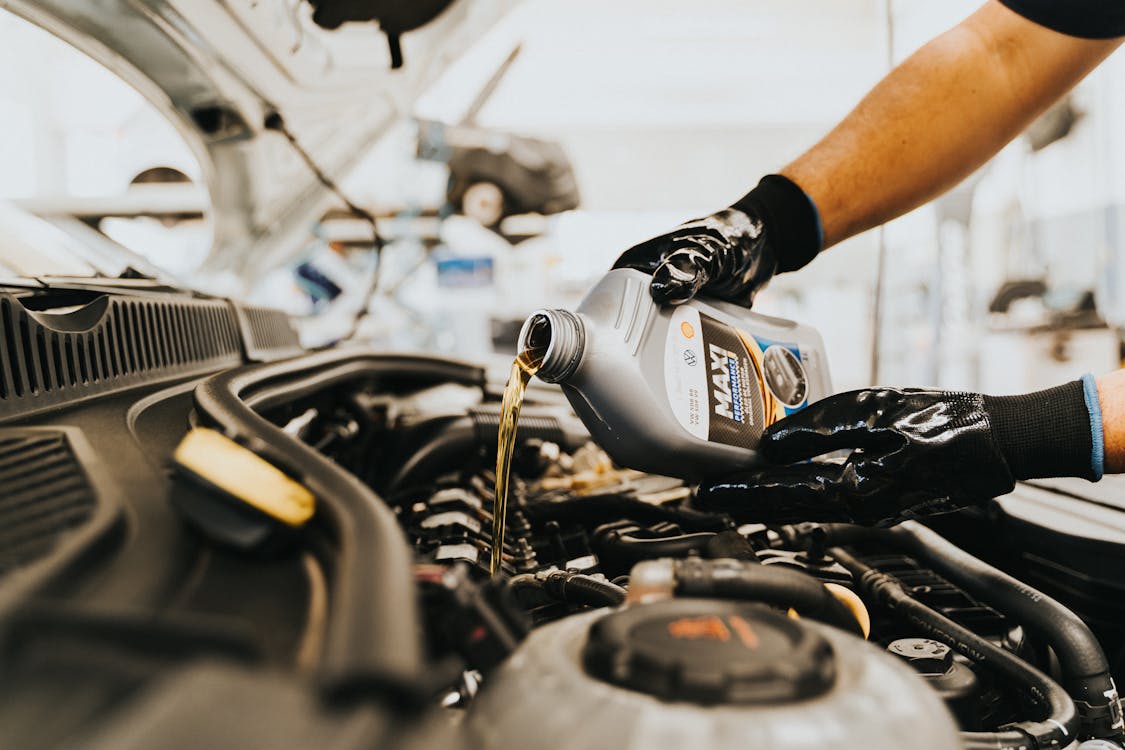
Pouring Oil to Engine by Daniel Andraski is licensed with Pexels license
0 comment(s) so far on Signs Your Car Needs An Oil Change