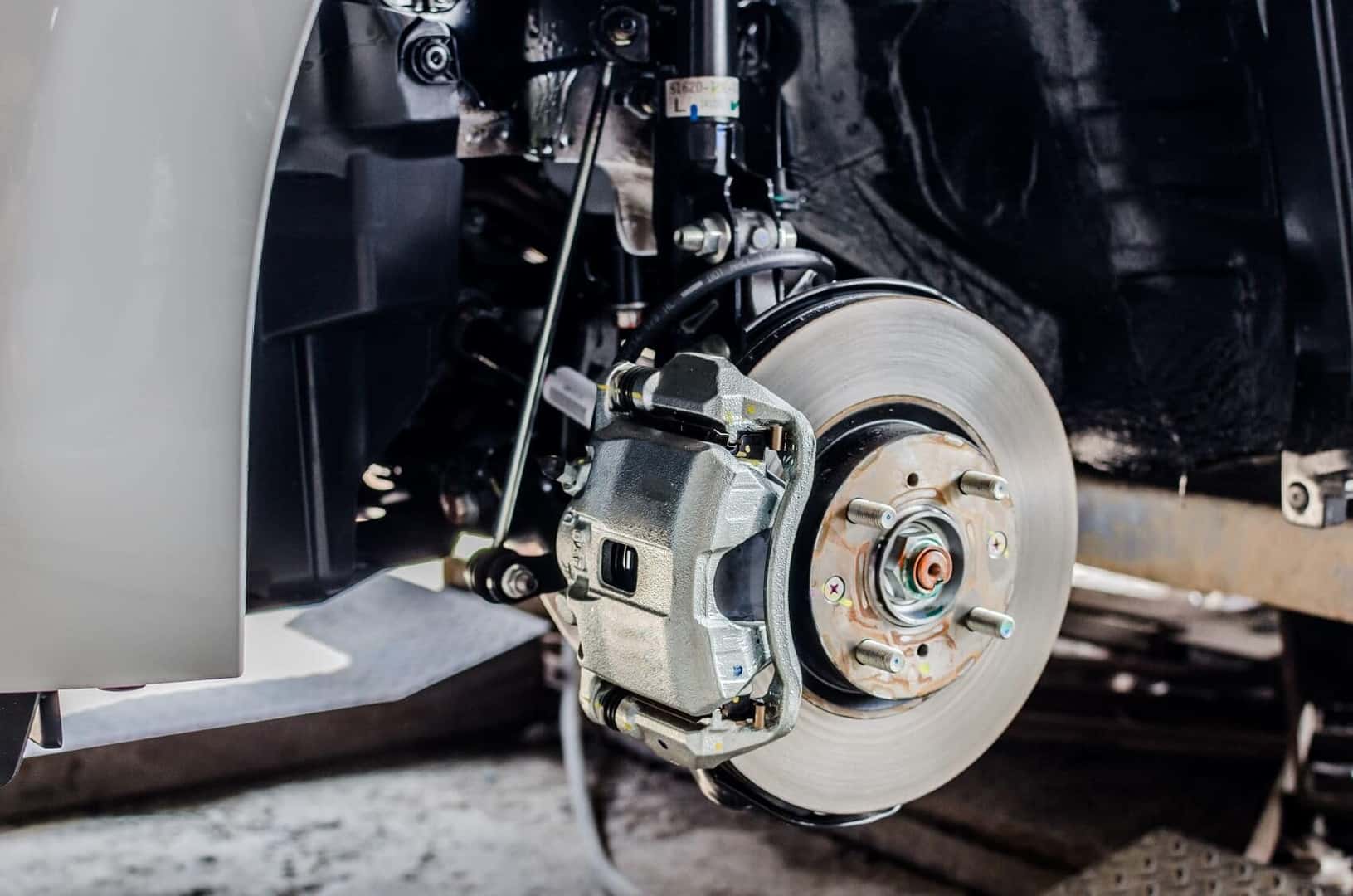
Whether you need new brake pads, new brake rotors, or even require another type of brake repair, we’ll be able to assist here at Hyundai of Auburn. With our state-of-the-art body shop and expert-level service team, we’ll be able to handle all your brake repair needs with care.
Learn about our brake services and schedule an appointment today.
Your brakes are responsible for allowing you to slow down and stop as you drive. What allows your vehicle to slow when you press the pedal, though? Well, there’s a complex system of components at work in your braking system, each of which plays an important role in your ability to slow down and stop.
When you press the pedal, it sends pressure through your brake lines. This pressure will travel to your brake calipers. Here, the pressure will be used to press your brake pads against your brake rotors, creating the friction necessary within your wheels to slow and stop the vehicle.
All these components are critical to the integrity of your braking system, so it’s quite important that everything is working at an optimum level.
Your Hyundai’s braking system is one of its most critical safety features. Over time, components like brake pads, rotors, and calipers naturally wear down and require attention. Ignoring early warning signs can lead to reduced stopping power and more extensive repairs.
Our team carefully evaluates your braking system to identify any issues and recommend the appropriate service.
Recognizing the early signs of brake wear can help you avoid more serious problems. If you notice any of the following, it may be time to schedule service:
Addressing these symptoms promptly can help maintain your vehicle’s performance and safety.
On average, brake pads may need replacement around 30,000 miles. The exact timing depends on your vehicle, driving style, and local conditions such as traffic patterns and climate. Regular inspections during routine service visits can help determine when replacement is needed. *
Driving with worn brakes can lead to damage beyond just the brake pads. As pads wear down, they can affect the rotors and other braking components, increasing repair costs.
Reduced braking performance can also extend stopping distances, which impacts overall vehicle control. In some cases, uneven braking may contribute to irregular tire wear, shortening tire life as well.2
Locate the brake fluid reservoir under the hood, on the master cylinder. You can check your owner’s manual if you need help finding it.
Check the brake fluid level against the “maximum” and “minimum” lines on the exterior of the reservoir. If you see the brake fluid is at or near the “minimum line,” and has a murky color, it could be contaminated and ready for a change and inspection.
Do you need to schedule a brake repair in Auburn, Montgomery, and Pike Road, AL? Just contact our team here at Hyundai of Auburn to schedule an appointment. We’ll get you to set up for an appointment. Have questions in the meantime? We’ll also be happy to help!
We’re proud to serve local drivers and hope to assist you soon!